Tag: Music

  • I Went Back to Fabric After 7 Years and Found the Queue Quite Stressful

    I Went Back to Fabric After 7 Years and Found the Queue Quite Stressful

    Sometimes, a night just escalates.

    You’re in the pub after work on Friday (“just a quick one, I’m having a quiet weekend”) and then suddenly – well, five hours later – it’s closing time and you’re walking across Farringdon saying well look it’s just an option, let’s just see what the queue’s like.

    Then you’re looping around a series of metal barriers and joining the line, standing behind a glassy-eyed girl in a bright pink furry coat who’s currently being admonished by security because they told her to come back in an hour, and if she could speak she’d be like yeah, and what?, but she can’t and they’re all come on love, out you get, it’s only been five minutes.

    Then the queue’s moving and even though you’re not far enough round the corner to see the doors yet, it’s decided. After a seven year absence, you’re going back to Fabric.
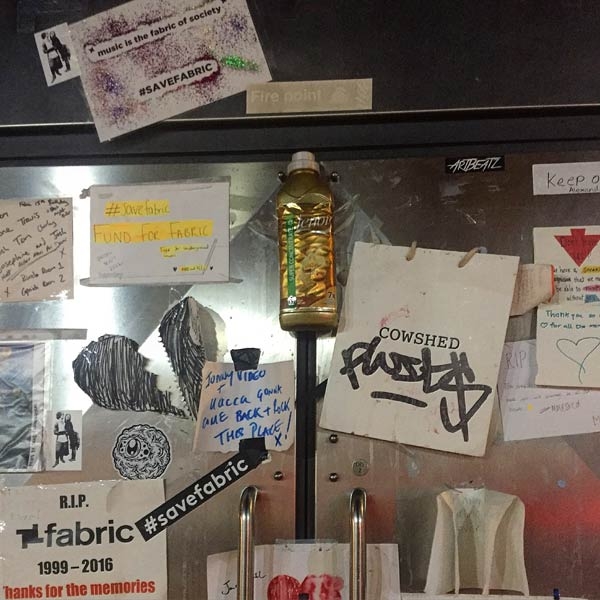
    Fabric had its licence revoked by Islington Council last year.

    The idea was that closing one of London’s biggest nightclubs would go some way to reducing the chances of people dying from taking drugs – in nightclubs, in London, in general – which they’d probably have got away with if it hadn’t been for the growing trend of London’s nightclubs shutting up until then.

    It was happening gradually, one by one; something you’d probably only notice if you’re either very into music (me), grew up dancing in sweaty clubs (me) or go raving on a weekly basis (no longer me). “Operation Lenor”, as it was affectionately termed by the Met, seemed to be an excuse to get another pesky venue off the council’s problem sheet. Aside from anything else, places like Farringdon are a goldmine for property developers – but god, if nightclubs open til 7am don’t put a dampener on people wanting to move in next door.

    Thankfully, the world’s music community came together and kicked off. Fabric appealed, and re-opened a few weeks ago to the sound of whistles, horns, and pull uppppps.

    One of the conditions of their re-opening was that they change their door policy, and having been there myself last week, I can confirm that this has been done.

    And to be honest, you’d probably have an easier time getting into Air Force One.
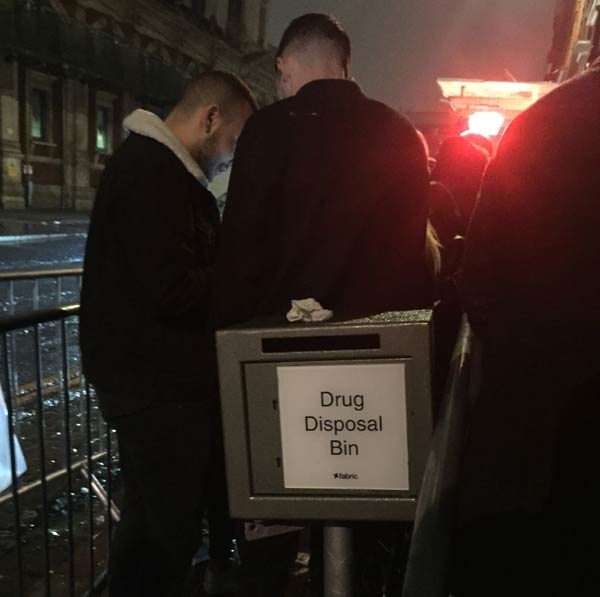
    Getting into Fabric is stressful.

    We are told to come forward, then barked at to GET BACK. A man is held to one side in the queue because he did not GET BACK.

    One of our group is taken to one side and asked what he’s taken, which is nothing, because he’s not on drugs. What he is is an app developer from South America who’s a bit baffled by all the fuss, keeps whispering “is it worth it, is it really that good?” and despite my reassurance that “it was when I was 25!”, is currently reconsidering his decision to follow us into what appears to be a version of Kafka’s Crystal Maze.

    At the front of the queue, still outside, the men go into a separate security queue and eventually emerge holding plastic bowls containing the contents of their pockets ready for inspection.

    The girls (“STAY LEFT”) have our IDs scanned, our photos taken, and walk through a metal detector before coming tit-to-hand with the evening’s first body search. “Relax” says the female security staff, correctly deducing from the panicked rigidity of my torso that at this point, I Am A Little Bit Tense.
    Perhaps this is Fabric’s game plan.

    There’ve been many times in life where I’ve felt relieved about not doing drugs, and the half an hour it takes to get through the door at Fabric is definitely in the top five.

    But to be fair, as far as anti-drug strategies go, making the people who are on drugs as uncomfortable as possible by edging away at their sanity on the way in so their mild paranoia morphs into overwhelming fear and they’ll just give up and go home…I mean, it’s not a bad shout.

    Because the thing is, even if you haven’t taken drugs, under this level of scrutiny and all the shouting, you begin to start to wonder if somehow, perhaps unknowingly between the pub and the doorway, maybe you have.

    And while I’m pondering what I could have taken, another woman searches my bag, combs through the contents and removes my digital camera, sellotaping one half of a numbered raffle ticket to it, giving me the other side, and placing it into a plastic box at her feet. No one tells me why.

    All I know is this is not how clubs rolled in 2001.
    Eventually, minus one – we are in.

    And even though that was almost certainly one of my Most Stressful Queuing Situations Of All Time (non Brits: yes, this is a real thing), a few minutes is all it takes to be reminded why Fabric had to come back, why it is brilliant, and why it has the reputation it does in the world’s clubbing scene.

    Security have done their job and the crowd’s friendly. Room 1 is packed out and dancing. The sound system in Room 2 is crystal clear and brand new. The fast, hard step drum and bass tumbling out of the speakers is so loud that when you stand still, your chest keeps moving. And it’s then that your traumatic queue anxiety fades and for the first time since you suggested it back in the pub, you know: this night is going to be good.

    And it is good. It’s so good that I dance until after 6am and when I do leave, it’s with ringing ears, dirty trainers, and an absolute craving to come back and do it all again next week.

    And as long as the door security doesn’t get me first, at least now I can.  

  • In Praise of James Blake at Brixton Academy (and the bloke who told the crowd to shut up)

    In Praise of James Blake at Brixton Academy (and the bloke who told the crowd to shut up)

    There were quite a lot of signs dotted around Brixton Academy at James Blake’s gig on Saturday night.

    They were written in that polite, pointed, yet restrained way that British signs tend to have. You know, where you can tell the person wanted to really wanted to swear, but instead opted for the more rational “hey guys, would you mind…” approach.

    They were essentially asking people to keep the noise down during the show. And also advising them that if they really wanted to have a conversation, they’d be welcome to do so outside the main auditorium.

    The subtext: STFU you idiots, and have some respect.

    Pretty reasonable.

    Brixton Academy was also making a point of asking people to be quiet during the show on Twitter.

    If that wasn’t a big enough hint, they then started shutting down a few of the bars inside the main room before it started.

    And a few minutes into James Blake’s set, it was obvious why.

    Because as it turns out, getting a few thousand people to stand and listen to some insanely good music live in 2016 without also chatting to their mates at the same time is a nigh on impossible pipe dream.

    They won’t do it. They can’t do it.

    The crowd wouldn’t shut up.

    Which is why, when this man yelled “SHUUT UPPPPP” across the crowd at the beginning of Retrograde, it went down pretty well.

    Why bother coming to a gig if you’re not arsed about listening to the music?

    At one point, a group behind me were loudly observing that all his songs were slow, and it’s not what they expected, and shouldn’t they go to the VIP bit and have shots of tequila, and how annoying it was that they’d paid £24 per ticket. So I turned around and said “You know what’s annoying? Having someone in your ear” which seemed to do the trick.

    And if it’d been a really dull, boring gig, you could almost say ok, fair enough: have a chat. But it wasn’t.

    James Blake’s gig on Saturday was probably one of the best I’ve been to all year. Seriously: the man is brilliant live.

    Thankfully, James Blake himself asked everyone to be quiet while he recorded the loops for the encore of Measurements (“if it could just be me, that’d be good”). And the audience finally obliged. For the final track it was so quiet you could have heard a plastic beer cup drop.

    (and we did)

    It’s just a shame the crowd couldn’t have afforded him the same respect for the rest of the gig.

    Then again, maybe that’s not the only gig-going etiquette people were struggling with.

  • Don’t Close Any More of London’s Nightclubs. #SaveFabric

    Don’t Close Any More of London’s Nightclubs. #SaveFabric

    In 2016 Islington Borough Council closed Fabric – one of London’s most famous and best clubs – indefinitely, pending a review of its licence.

    *Update – the campaign to save Fabric was a success, and the club has now reopened. Here’s what happened when I went back.*

    Even if you’ve never been to Fabric, and have no interest in staying out late dancing to loud fast music, or don’t know what Fabric is and what its closure might mean for London – then allow me to try and explain.

    save-fabric-1

    If you’re into dance music, you’ll probably have known about Fabric long before you were old enough to actually get in. 

    In fact, most of my memories involve spending four hours in a queue drinking pre-mixed booze out of an Evian bottle in the hope of getting into a True Playaz drum ‘n’ bass night, which, no matter how often we tried, by 11pm always had a huge queue snaking towards Cowcross Street, and was already one in, one out.

    But if I wasn’t going to get into Fabric, I was going to listen to one of their resident DJ mix CDs instead.

    The Never Ending Queue meant I was about 25 before I went to Fabric with any regularity. I was getting back into the London club scene after uni to find that Kings Cross was done, and Matter (now closed) and Fabric were the next logical choice. 

    Even if you had a ticket, it somehow always felt like you might not get in. But once inside, it was always packed. Lasers pinged across the main room. There was a warren of phone signal-less stairways. You’d invariably be there to see one of the world’s best DJs. When you lost whoever you were with in the crowd, you made friends in the outdoor courtyard.

    The music was always, always good.

    save-fabric-cover2

    If Fabric closes, it’s more bad news for London’s nightlife. 

    And yeah, perhaps your clubbing days are over. Perhaps they never really got started. Perhaps you haven’t noticed the slow drop off in some of London’s biggest clubs and their associated nights – but it’s happening, bit by bit.

    It’s the regeneration of huge former all-night party areas like Kings Cross, it’s councils trying to appease people who might move in next door to the Ministry of Sound and complain about the, er, sound.

    In Fabric’s case, it’s an effort to stop people taking drugs – which frankly, ignores a much, much bigger issue, one that closing nightclubs isn’t going to solve. It’s borough councils imposing licencing restrictions that make it impossible to run regular, good late night venues.

    It’s freeing up valuable space which could be used for something a bit more sanitary than a load of sweaty people having a good time. A Tesco, a soulless bar, luxury flats.

    save-fabric-1

    But it’s important that London has nightclubs. 

    If, like me, you grew up in London, listening to the sort of music that required a line-up of DJs, set times, massive sound systems, MCs, airhorns, a scanned copy of your passport with the dates changed, whistles, horns, trainers, and enough hours in the night for it all to play out, then you’ll know how these kind of places can shape your youth.

    I was 16 when I first went to Bagleys for a night called One Love. I spent all night dancing with thousands of strangers in this huge warehouse in Kings Cross – big up anyone else who remembers *those* yellow railings at the front – and knew by the time I got home at 8am the next morning, that there weren’t many other places I’d rather spend a Saturday night.

    This article in Dazed sums up why quite nicely:

    Nightclubs are part of our culture. They’re spaces for communities to form that you may not even know you want to be a part of yet. They’re full of the friends you’ve yet to meet. They’re a space for you to develop your identity; to form nascent relationships (personal or otherwise) with sweaty strangers you shoulder barge at a bar or bond with over a 6AM fag, shivering as the sun comes up and the sweat dries over the back of your neck.

    These clubs bring people to London, they make our city good. They support artists. They develop talent. They give someone who loves music a place to find, meet, and dance surrounded by like-minded people.

    Put simply: it’s important that people who love music have a place to go out, stay out, dance, and hear it.

    And the way things are going, night tube or no night tube – London’s supply of night life is running short.

    There’s currently a petition running to #SaveFabric. You can sign it, download a campaign pack of images, tweet your support. 

    More info here: http://www.fabriclondon.com/save-fabric