Tag: Thoughts on life

  • Why Being Bored Is Good For You

    Why Being Bored Is Good For You

    A few days ago I was walking through the city, near St Paul’s.

    And because I had nowhere else to be, I ended up taking a mid-afternoon detour through Postman’s Park.

    I headed to the flower bed in front of all the plaques, parked myself on a bench, and made a conscious effort to just sit and look around.

    And more and more I find it is a conscious effort – I hardly ever just sit and do nothing these days. There’s always a way out.

    Postman’s Park (image: Diamond Geezer)

    How many collective minutes, hours, days, weeks and months do you think we’ve lost to just absently staring at our phones? I asked my housemate that the other day while we were watching TV – well, half watching, you know how it goes.

    Don’t worry, I’m not going to go all “phones are bad, delete your apps, don’t use them” at you – the truth is, I’m not quite sure how I ever navigated London with any success without mine.

    My phone tells me the weather, shows me important dog news, lets me communicate with my friends using only the whale emoji, and on those rare occasions when I venture out of my stomping ground and into south London, it tells me how to get home. Plus, Twitter and Instagram remain my favourite way of not talking when I don’t really feel like it, and not making eye contact with people I want to avoid.

    Phones have become a shortcut, a fast forward, an excuse to be busy. They’re the somewhere else you have to be without actually moving your feet.

    When you live in a big city, phones are pretty much essential. But we also need to give our brains time to stop and drift and think.

    Because I’m not sure I really want to find myself patting around for a little screen whenever I pause or have to wait anywhere, or immediately reaching for it whenever I sit down, or creepily cupping it in my pocket wherever I walk.

    And the truth is, I’ve got this nagging feeling that I think most of us would like to be doing more with our spare time – myself included – and an equally nagging feeling that phones will probably be why most of us won’t.

    So I’m trying to become a bit more conscious and aware of how I’m spending my time, and allow myself to get bored. I want to get to the point where reaching for my phone when I have nothing to do feels weird and ridiculous and odd, instead of the other way around.

    I thought about all this as I sat in Postman’s Park, and listened to the passing traffic, sirens and car horns. I sat, and occasionally wrote down ideas, and got restless. My mind drifted and wondered, and my eyes scanned and watched. A few times, patches of flowers round the edge of the bed quivered, and out popped the nose of a tiny mouse.

    And in contrast to all the other times I’ve sat down to kill some time and ended up distracting myself, by the time I got up and walked off with this post writing itself in my head, I knew exactly where half an hour could go.

    This post originally appeared in my weekly newsletter. Find out more about that badboy here

  • Excuse Me For A Sec While I Raise Some Awareness

    Excuse Me For A Sec While I Raise Some Awareness

    This post originally appeared in my weekly newsletter which is usually about London, or me, or dogs, or all those things at once. Or like this one, something else entirely. You can sign up here.

    Last week, my mum took herself into central London.

    She was looking for the offices of a magazine she subscribes to; I’m not sure exactly why. But she couldn’t find the building, so she got back on the train and came home, and began calling them instead.

    My mum is 67 years old.

    She likes shopping, the mountains, going to the snow centre in Hemel Hempstead, getting her hair done, exhibitions at the RA in Green Park, and concerts at the Royal Albert Hall. Every Saturday at 6pm she’ll go for dinner in Prezzo, and a few months ago – to our collective bafflement – she started going to church.

    My mum and dad looking swish at the Guildhall in 2015

    My mum also has Frontotemporal dementia.

    Which, if you’re not familiar – and I wasn’t, so why would you be – is the official name for Pick’s Disease; the most common form of dementia affecting young people.

    (The one and only upside to dementia, it turns out, is being considered young if you’re under 65).

    She was diagnosed two years ago, but we’d been watching the slow deterioration of her capacity to understand, communicate, and behave in what would be considered a socially acceptable way for a while before that.

    Dementia’s trump card is its slow progression, which is either a blessing or a curse depending on what stage you’re at. It dawdles along for years removing the names of everyday objects and people, steadily chipping away at empathy, tipping into weird and compulsive behaviour. At times, it shifts into a mode I like to call “wtf, you’re making no sense”.

    Essentially, it makes pinpointing the exact moment the person is no longer able to do something a difficult game. And as Pick’s sufferers have little to no awareness that there’s anything seriously wrong, it’s the family who have decide when to allow the person their independence, and when to take it away.

    Before mum was diagnosed, I had an idea of what dementia looked like in my head.

    It had the withered, expressionless face of an eldery person, a mind that forgot how to find their way home, and a body that fell over. It was also clad in beige.

    In reality, mum looks like any other ex-head teacher who’s seven years into retirement. She goes to daily classes at the gym, takes the tube, walks the dog, wears make up – although increasingly dad has to remind her to put it on – and colour co-ordinates her clothes (usually either purple, pink, red or blue).

    She presents as a normal 60-something, but after a couple of minutes of one-way conversation, you’ll realise something’s not quite right.

    If you know what’s wrong, you’ll understand and roll with it.

    If you don’t, you’ll probably do what the staff at the woman’s magazine did, which is start to worry and call 101 to have the police do a check.

    Despite affecting a frankly ridiculous amount of people worldwide, dementia isn’t really talked about that much. Least of all by the family and friends going through it, and rarely by the sufferers themselves – who aren’t always elderly, frail, and forgetting their way.

    September 21st was World Alzheimer’s Day, and September is World Alzheimer’s Month, which sets out to raise awareness of the different types of dementia in all the forms it takes. And that’s why I’m going slightly off topic today and writing this – because the more people who are aware that there are people like my mum around the world, and in this city, the better.

    Because she’ll undoubtedly continue taking herself up to London on errands she can’t explain and we don’t understand. And we’ll continue to let her, as long as it’s safe.

    You can donate money to the Alzheimer’s Society here

  • A List of Things I’ve Learnt About Living in London Since 1984

    A List of Things I’ve Learnt About Living in London Since 1984

    A few of us are turning 30 this year.

    Maybe you’ve seen us around: we’re the ones with the fear in our eyes, skinny jeans on our legs and double rum and cokes in each hand, yelling “BUT WHAT HAPPENS NEXT?” on the Kingsland Road circa 3am.

    Over the last 29 years I’ve come to realise that not only is London a brilliant place to grow up, but it’s also a brilliant place to work and live when you’re not ready to grow up.

    And, I hope, it’ll be an even better place to drag myself kicking, screaming and consuming huge amounts of medicinal gin into my thirties.

    So in an effort to prove that the wild nights, hungover days and numerous flat rentals have been worth more than the thousands of pounds they’ve cost me financially, here are some things I’ve learnt about living, commuting and working in this massive city so far.
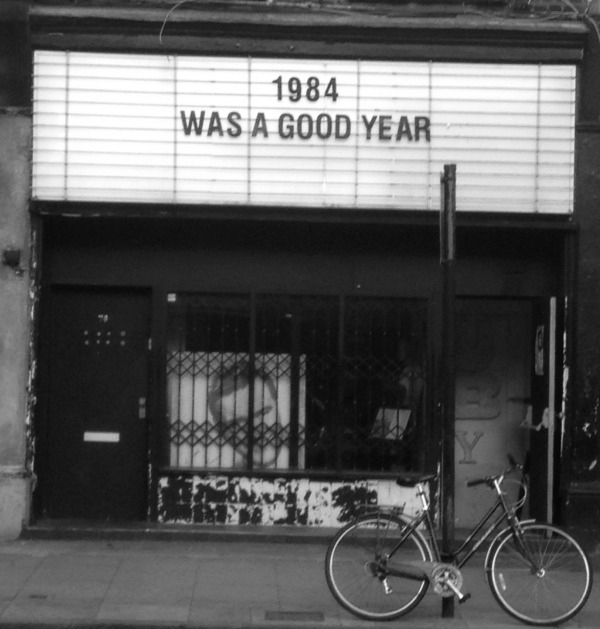
    1984

    Navigation.

    1. Londoners are not unfriendly.

    In general, the good people of this city will try and help you if they can – unless you’re a chugger, it’s 7:30am, or their bus is coming.

    2. But no, they’ll never want to chat on the tube. 

    The underground is like a sanctuary. It’s the only place we can stop, put our music in, and have a little quiet time. Don’t ruin it with your campaigns to make it otherwise.

    3. You should always have at least one spare Oyster card handy.

    Keep one in a drawer. Stash one in your wallet. Hide one under the mat. You’ll need it – and if you don’t, I definitely will.

    4. The bus is loads better than the Underground.

    Imagine the tube, but cheaper, loads better, and with more free seats in the morning. Game changer, my friends. Game changer.
    doing stuff

    Money.

    5. London makes people obsessed with their bank balance.

    When people first move here, they go a bit money mad: the lack of it, how to get more, what their friends earn, how much everything costs compared to where they’ve been living up until now, and whether they should pack it all in and become a banker. This doesn’t really ever go away completely, but after a while they’ll realise:

    6. You will never earn enough money here.

    Sorry. London’s a bastard like that, always showing you things you can’t have. So here’s what you do: you get a salary that covers the rent, work hard, earn a bit more, then get on with enjoying what you’ve got. Usually in a shot glass.

    7. The best things in London are free.

    If you’re bored, skint, and don’t have anything to do, congratulations: this is the easiest place to find something that costs £0. It’s also the best place to meet people who can help blag you in.

    8. London warps your concept of how much things should cost.

    Paying £8.50 for a cocktail is normal, and I don’t know what this means any more.
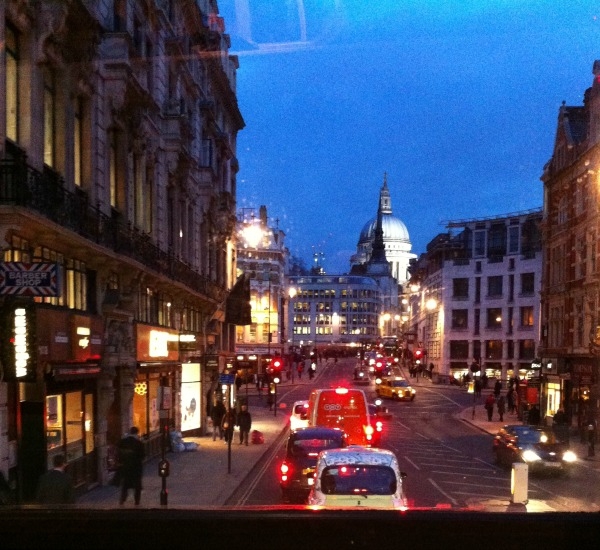
    commute

    Working.

    8. Always go exploring on a weekday.

    The best days off are the ones where you do everything that seems like too much effort on a Saturday. Shop, eat, drink, look, get the Clipper, museum hop, walk without people getting in your way – and, yes, go to the zoo.

    9. Shortening your commute – even a little bit – is the best thing ever.

    If you’re living in Zones 1-3 and your commute still takes longer than an hour, either move your house, or move your work. You will be instantaneously happier, and that extra 15 minutes in bed will be the reason why.

    10. Do a job you like.

    Don’t be one of those people that bores on about how unhappy they are in their job – you’re in London. Change it. You’ve got a better chance of succeeding at doing that here than anywhere else in the country.

    11. Work somewhere sociable.

    Preferably with people who like standing outside the pub after work on Fridays. And Mondays. And Tuesdays. Sometimes Wednesdays. Definitely Thursdays.

    2013-04-05 23.47.17

    Dating. 

    12. Don’t date people who have just moved to London.

    They’re enthusiastic, full of good intentions, have masses of ambition and every other attractive quality you can think of, but the bright city lights will usually end up shining brighter than you do. Don’t take it too personally. Give ’em a year or two for mild discontent to set in.

    13. This is the best place in the world to be single.

    The other night I heard this rumour that outside of London, whole friendship groups of twenty-somethings are settling down and getting married ‘n’ stuff. Which is a bit mental.

    14. It’s also the best place in the world if you don’t want to be single. 

    You can meet people on the tube, waiting for a night bus, at house viewings, on Hampstead Heath, eating dinner, at pubs, in a park, through Twitter, or in your block of flats. And if they’re not in any of those places, they’ll probably be on Tinder.

    15. London is a very, very small place.
    Never underestimate how often you will bump into people you thought (or hoped) you’d never see again. Seriously. They’re everywhere.

    pigs

    Renting.

    16. Renting is a good thing.

    Do not, I repeat, do not feel crap because you can’t afford to buy in London. Funding a landlord’s Barbados timeshare isn’t a waste of money if you’re happy, don’t want to live further out, or, y’know, don’t have a spare £500,000.

    17. Looking for a house share is probably the least fun thing ever.

    Always be picky. Hearing your housemates’ key turn in the front door should inspire “woohoo! Someone’s home!” joy, not “urgh, go awaydespair.

    18. You should always live with people you can go for beers with. 

    It just makes life easier when you all come home drunk and noisy at the same time.

    19. The ideal housemates are usually friends-of-friends. 

    Research (by me) has proven that the best people to live with are those you meet via a mutual friend. The more tenuous the connection the better. It gives you slightly more reassurance that they’re not mental.
    commute

    Going out.

    20. Uber is the best invention ever.

    Sorry black cabs. I’ve shelved the moral outrage and embraced the cheap cabs home.

    21. Most “street food” festivals are a rip off.

    I have yet to come away feeling satisfied after paying £10 for a ticket, then £5-10 for food I’ve queued half an hour for.

    22. Going to the cinema on your own is amazing.

    Prince Charles Cinema. A good documentary. Sunday afternoon. Go see whatever’s on, switch off your phone and sit in the dark for a bit.

    23. There is no day that cannot be improved by seeing a dog on the bus / tube.

    This is a scientific fact.

    24. Dishoom is the best restaurant ever.

    Lamb raan, black daal, East India gimlet: worth queuing for.

    dog on the bus

    And finally.

    25. North London is better than south.

    Shut up, it’s my list.

    Feel free to pass on this knowledge to your friends. Or at least send me a consolation birthday present in a month’s time.