Category: Everything Else

  • Why Being Bored Is Good For You

    Why Being Bored Is Good For You

    A few days ago I was walking through the city, near St Paul’s.

    And because I had nowhere else to be, I ended up taking a mid-afternoon detour through Postman’s Park.

    I headed to the flower bed in front of all the plaques, parked myself on a bench, and made a conscious effort to just sit and look around.

    And more and more I find it is a conscious effort – I hardly ever just sit and do nothing these days. There’s always a way out.
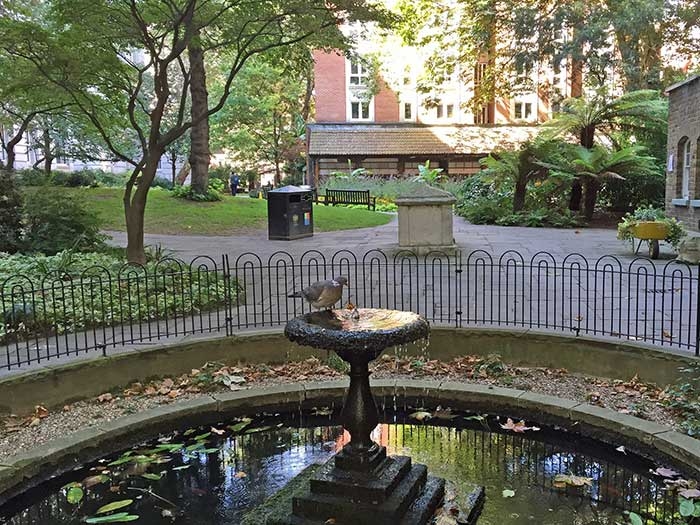
    Postman’s Park (image: Diamond Geezer)

    How many collective minutes, hours, days, weeks and months do you think we’ve lost to just absently staring at our phones? I asked my housemate that the other day while we were watching TV – well, half watching, you know how it goes.

    Don’t worry, I’m not going to go all “phones are bad, delete your apps, don’t use them” at you – the truth is, I’m not quite sure how I ever navigated London with any success without mine.

    My phone tells me the weather, shows me important dog news, lets me communicate with my friends using only the whale emoji, and on those rare occasions when I venture out of my stomping ground and into south London, it tells me how to get home. Plus, Twitter and Instagram remain my favourite way of not talking when I don’t really feel like it, and not making eye contact with people I want to avoid.

    Phones have become a shortcut, a fast forward, an excuse to be busy. They’re the somewhere else you have to be without actually moving your feet.

    When you live in a big city, phones are pretty much essential. But we also need to give our brains time to stop and drift and think.

    Because I’m not sure I really want to find myself patting around for a little screen whenever I pause or have to wait anywhere, or immediately reaching for it whenever I sit down, or creepily cupping it in my pocket wherever I walk.
    And the truth is, I’ve got this nagging feeling that I think most of us would like to be doing more with our spare time – myself included – and an equally nagging feeling that phones will probably be why most of us won’t.

    So I’m trying to become a bit more conscious and aware of how I’m spending my time, and allow myself to get bored. I want to get to the point where reaching for my phone when I have nothing to do feels weird and ridiculous and odd, instead of the other way around.

    I thought about all this as I sat in Postman’s Park, and listened to the passing traffic, sirens and car horns. I sat, and occasionally wrote down ideas, and got restless. My mind drifted and wondered, and my eyes scanned and watched. A few times, patches of flowers round the edge of the bed quivered, and out popped the nose of a tiny mouse.

    And in contrast to all the other times I’ve sat down to kill some time and ended up distracting myself, by the time I got up and walked off with this post writing itself in my head, I knew exactly where half an hour could go.

    This post originally appeared in my weekly newsletter. Find out more about that badboy here

  • Excuse Me For A Sec While I Raise Some Awareness

    Excuse Me For A Sec While I Raise Some Awareness

    This post originally appeared in my weekly newsletter which is usually about London, or me, or dogs, or all those things at once. Or like this one, something else entirely. You can sign up here.

    Last week, my mum took herself into central London.

    She was looking for the offices of a magazine she subscribes to; I’m not sure exactly why. But she couldn’t find the building, so she got back on the train and came home, and began calling them instead.

    My mum is 67 years old.

    She likes shopping, the mountains, going to the snow centre in Hemel Hempstead, getting her hair done, exhibitions at the RA in Green Park, and concerts at the Royal Albert Hall. Every Saturday at 6pm she’ll go for dinner in Prezzo, and a few months ago – to our collective bafflement – she started going to church.

    My mum and dad looking swish at the Guildhall in 2015

    My mum also has Frontotemporal dementia.

    Which, if you’re not familiar – and I wasn’t, so why would you be – is the official name for Pick’s Disease; the most common form of dementia affecting young people.

    (The one and only upside to dementia, it turns out, is being considered young if you’re under 65).

    She was diagnosed two years ago, but we’d been watching the slow deterioration of her capacity to understand, communicate, and behave in what would be considered a socially acceptable way for a while before that.

    Dementia’s trump card is its slow progression, which is either a blessing or a curse depending on what stage you’re at. It dawdles along for years removing the names of everyday objects and people, steadily chipping away at empathy, tipping into weird and compulsive behaviour. At times, it shifts into a mode I like to call “wtf, you’re making no sense”.

    Essentially, it makes pinpointing the exact moment the person is no longer able to do something a difficult game. And as Pick’s sufferers have little to no awareness that there’s anything seriously wrong, it’s the family who have decide when to allow the person their independence, and when to take it away.

    Before mum was diagnosed, I had an idea of what dementia looked like in my head.

    It had the withered, expressionless face of an eldery person, a mind that forgot how to find their way home, and a body that fell over. It was also clad in beige.

    In reality, mum looks like any other ex-head teacher who’s seven years into retirement. She goes to daily classes at the gym, takes the tube, walks the dog, wears make up – although increasingly dad has to remind her to put it on – and colour co-ordinates her clothes (usually either purple, pink, red or blue).

    She presents as a normal 60-something, but after a couple of minutes of one-way conversation, you’ll realise something’s not quite right.

    If you know what’s wrong, you’ll understand and roll with it.

    If you don’t, you’ll probably do what the staff at the woman’s magazine did, which is start to worry and call 101 to have the police do a check.

    Despite affecting a frankly ridiculous amount of people worldwide, dementia isn’t really talked about that much. Least of all by the family and friends going through it, and rarely by the sufferers themselves – who aren’t always elderly, frail, and forgetting their way.

    September 21st was World Alzheimer’s Day, and September is World Alzheimer’s Month, which sets out to raise awareness of the different types of dementia in all the forms it takes. And that’s why I’m going slightly off topic today and writing this – because the more people who are aware that there are people like my mum around the world, and in this city, the better.

    Because she’ll undoubtedly continue taking herself up to London on errands she can’t explain and we don’t understand. And we’ll continue to let her, as long as it’s safe.

    You can donate money to the Alzheimer’s Society here

  • We Got A Christmas Tree For Our Rented Flat And It’s The Best Thing Ever

    We Got A Christmas Tree For Our Rented Flat And It’s The Best Thing Ever

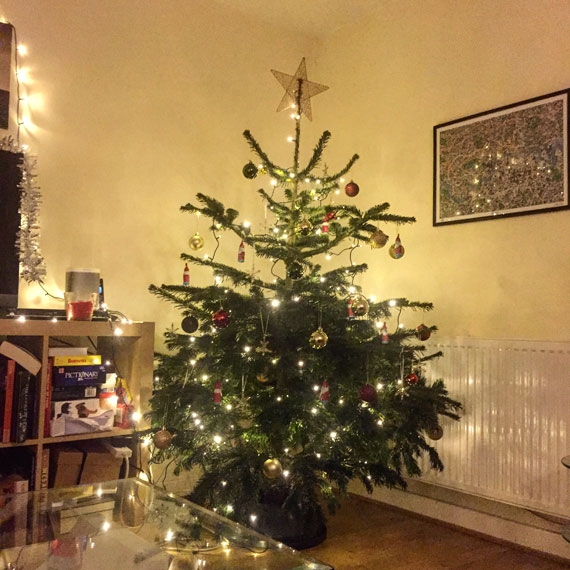
    This year we got a Christmas tree for our flat.

    If you’ve come within striking distance of me in the last week, then you’ll already know all about the tree. I’ll have told you about it, shown you photos. Instead of saying “hello how are you” like a normal person, I’ll have flung my iPhone into your face and yelled “LOOK AT OUR TREE”.

    Perhaps I’ve also invited you round to meet the tree. Perhaps you politely declined, and have been subjected to a slow drip feed of persuasive tree stories and carefully mood-lit images ever since.

    Getting a Christmas tree when you’re renting is a big deal.

    Mostly because every year you and your housemates will go “shall we get a tree?” and then decide that no one can be arsed, because it’ll die, because we’ll all be going home-home, no one will be here for Christmas Day.

    So deciding to actually get a Christmas tree is a landmark occasion. It’s an event, a commitment, a statement of permanence in your transient London renting life.

    It’s also, if I’m honest, a bit of an effort. Here’s why.

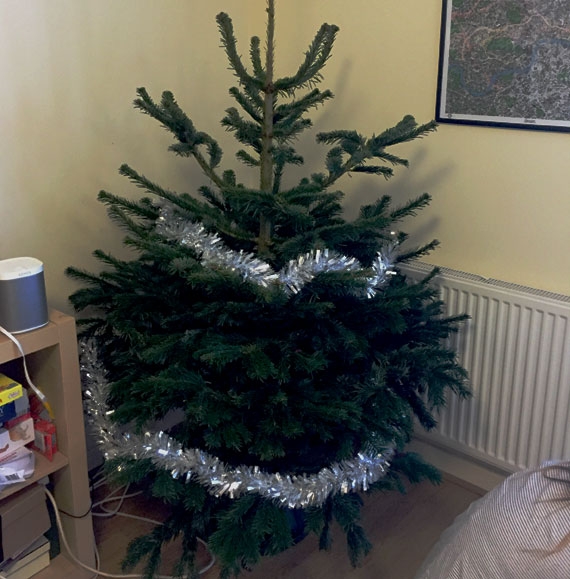
    Probably not the Narnia CS Lewis envisioned
    Step 1: Deciding between real or fake

    Granted, a fake tree could be easily procured from the Dalston branch of Argos, assembled, and used again for next year.

    But it’s inevitable: a fake tree in its massive box would end up joining the assortment of items currently congregating in the corner of our living room. There it would sit for the next 11 months, carefully balanced on the printer box, next to a rolled up rug, between the coat rack and a bike, quietly awaiting Christmas.

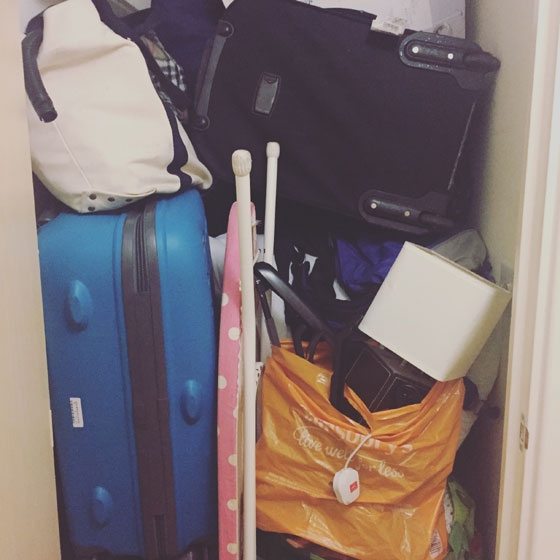
    That, or it’d get wedged inside Narnia, our ironically named hallway cupboard containing a dizzying array of hopes, dreams and scattered belongings left by housemates past and present. Namely several duvets, four suitcases, an ironing board, one Angry Birds fancy dress costume and a large bag of what I like to call “my seasonal wardrobe”.

    The fake tree would haunt us, eventually becoming one of those shared items you throw out with the toaster when everyone moves out. No, we needed simple, we needed disposable. We needed the smell of Christmas to cheer the humdrum routine of our repetitive, expensive London lives. We needed a real tree.

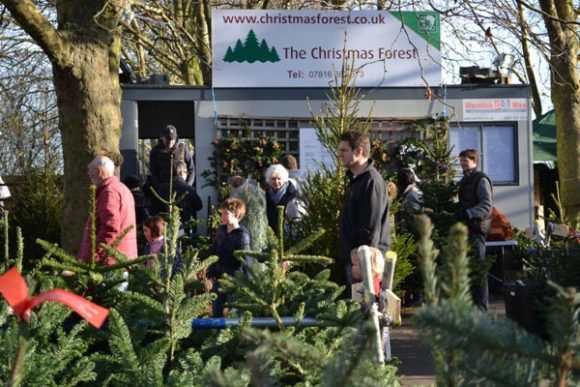
    Stoke Newington’s Christmas Tree Forest: a riot

    Step 2: Buying a real tree

    It’s generally accepted that you don’t need a car when you live in London. The only exception is likely to be when you happen to be in the market for a 5-6ft tree.

    We did not have a car, which meant our festive tree shopping trip wasn’t just an exercise in buying a Christmas tree, but reining ourselves in, remembering our limits, and not getting carried away.

    Admittedly I’ve never bought a house, but if house hunting is anything like trying to stick to an agreed budget and tree height when surrounded by a glorious selection of towering, bushy, 8-10 foot Norweigan firs in the Stoke Newington Christmas Forest, then I may be in trouble in years to come.

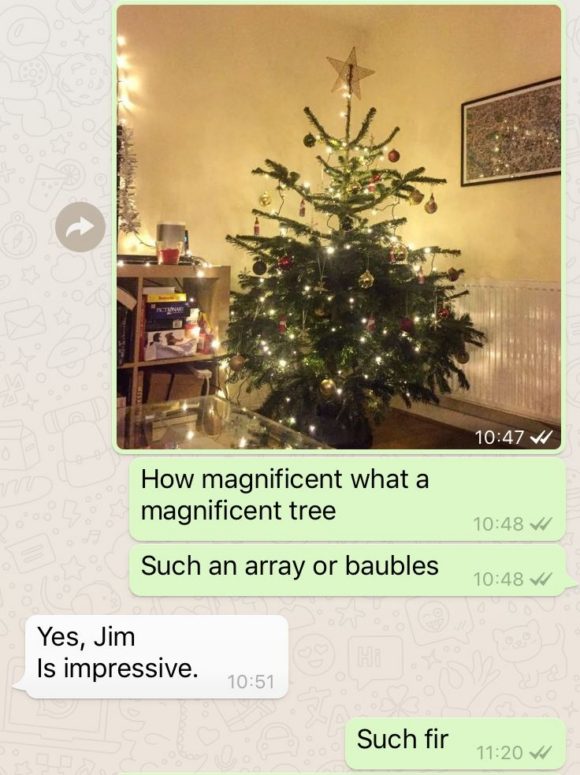
    Our saving grace was discovering the “Value Fir” section, where the trees were what some might call misshapen, or slightly less than perfect, and others might refer to as on the piss. It was there that we were introduced to Jim, who was £29 and 5-6 ft, slightly uneven at the base, a bit sparse on top, and therefore everything that we could have hoped for in a tree.

    We laid Jim the Value Fir on his side, grabbed an end each, and marched him home. Job done.

    Step 3: Decorating the tree

    In all the excitement of buying Jim, we sort of forgot about getting stuff to go on it.  The only decorations we had lying around consisted of one solitary strip of tinsel – aka last Christmas’ decorative effort – which didn’t go with our proposed 2016 colour scheme anyway.

    The problem is, no one moves into a rented houseshare with a box of Christmas baubles. You move into a rented houseshare with three big blue IKEA bags of clothing, a bin you’ve had since university, and a set of mismatched forks. So in short, we had to go back out and buy everything from scratch.

    We also aimed for a 60:40 bauble to chocolate ratio because these were our priorities.

    Step 4: Tell everyone how good your tree is

    There’s literally no point in getting a Christmas tree if you’re not going to go on and on about having one. I mean, you’ve literally got a tree in your living room. How often do you have a real actual tree from a forest in your living room?

    The good news is that there aren’t many conversations which can’t be brought round to the subject of Christmas trees. It’s pretty much all me and my housemate are talking about. Sometimes we just sit in the living room with the lights off and Jim sparkling in the corner, and ponder how lucky we are.

    As my housemate said this morning,”I don’t know why people don’t have trees in their living room all year round.”

    Seriously. Imagine how good the year would be.